Dallas–Fort Worth metroplex
Luxury Vinyl Plank (LVP)
Rigid-core, fully waterproof plank with a real wood look — the material of choice for whole-home installs that have to survive kids, dogs, and North Texas sun.
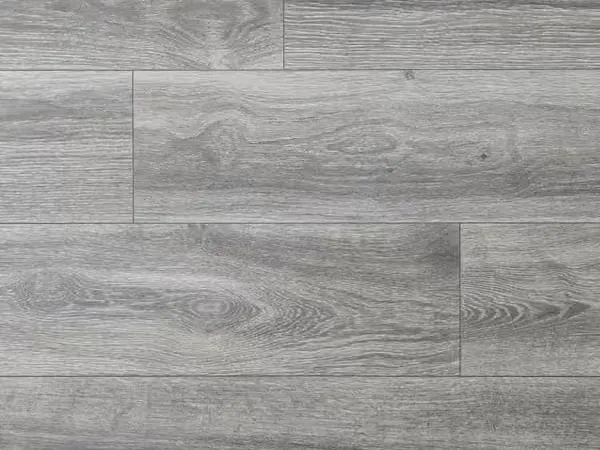
Waterproof through the whole house, without looking like it
Luxury vinyl has changed enough in the last decade that it is now the default for most whole-home projects we quote. Modern rigid-core plank — SPC and WPC — is dimensionally stable, fully waterproof, and printed and embossed well enough that you have to get down on the floor to tell it from wood.
The advantage over hardwood is that one material can run continuously through kitchens, bathrooms and laundry rooms without a transition, which is exactly what an open-plan North Texas house wants. The advantage over laminate is that a spill, a pet accident or a dishwasher leak is a non-event.
Core construction
SPC (stone-plastic) for maximum dent resistance and WPC (wood-plastic) for a softer, warmer underfoot feel.
Wear layer
12–30 mil for residential whole-home use; 20 mil and up where there are large dogs or a busy household.
Formats
7–9" wide planks up to 60" long, plus stone-look tile formats for wet areas — all from a single continuous run.
Installation method
Floating click-lock over an approved pad, or full-spread glue-down where a slab or heavy traffic calls for it.
Scope
What a luxury vinyl plank project includes
Slab preparation
Grinding, patching and self-levelling. Rigid core telegraphs every high spot, so flatness is not optional.
Continuous runs
Planning the layout so plank runs unbroken through the main level with no transition strips in open doorways.
Stairs & landings
Matching stair treads, risers and nosings finished in the same plank so the stairwell reads as one material.
Trim & finish
Quarter round or shoe moulding, undercut door casings, and matching transitions at carpet and tile.
Questions
Luxury Vinyl Plank questions, answered
Is luxury vinyl plank actually waterproof, or just water-resistant?
The plank itself is genuinely waterproof — a rigid core will not swell, cup or delaminate if it sits in water, which is the failure mode that kills laminate.
The seams and the perimeter are the real question. On a floating floor, standing water can eventually work through click joints to the subfloor. For laundry rooms, full baths and anywhere a supply line lives, we recommend glue-down installation and sealed perimeters.
Will LVP fade or buckle in a house with a lot of west-facing glass?
This is a real North Texas problem and it is worth designing around. Direct sun heats a floating floor, and vinyl expands and contracts more than wood does; if the expansion gap is undersized, the floor peaks at the seams.
We handle it two ways: correct expansion gaps at every wall and vertical obstruction, and glue-down installation in rooms with large south or west exposure. Choose a product with a UV-stable wear layer and a solid fade warranty, and ask about it before you fall in love with a colour.
How does LVP compare on cost to engineered hardwood?
Installed, quality LVP typically lands well below engineered hardwood of comparable visual quality, and the gap widens on jobs that need heavy slab preparation, because LVP tolerates a slightly less perfect substrate than glue-down wood.
Where hardwood wins is resale perception and refinishability — a wood floor can be sanded and recoloured in fifteen years, and LVP cannot. For a forever home we often recommend wood in the formal spaces and LVP through the back of the house.
Can you install LVP over my existing tile or hardwood?
Sometimes, and it is usually a false economy. Floating LVP can go over sound, well-bonded tile if the grout lines are skim-filled flat, and over hardwood that is flat and firmly fastened.
But it raises the floor height, which affects door swings, appliance clearances and stair risers, and it hides whatever is happening underneath. On whole-home projects we almost always recommend removing the old material.
How long does whole-home LVP installation take?
For 2,000–3,000 sq ft, plan on 1–2 working days for a floating install, plus a day up front for tear-out and slab preparation. Glue-down runs a day longer and needs cure time before furniture goes back.
Material should acclimate in the house for 48 hours before installation. We deliver it early so that clock is already running when the crew arrives.
Also from Artistry Floors
Most whole-home projects use more than one material
We install every surface in the house, so transitions line up and one contractor stands behind the whole floor.
Luxury Vinyl Plank across Dallas–Fort Worth
Free, itemised estimates for whole-home and multi-room projects. Call 469.604.5320 or send the details and our team will follow up within one business day.